The Advantages and Principles of Eco-Driving for Electric Public Transport Vehicles
Eco-driving mode offers substantial benefits across all means of electric public transportation. By adopting energy-efficient driving practices, transit agencies and operators can significantly lower operational costs, extend the lifespan of vehicles, and enhance safety for passengers and pedestrians alike. These practices help reduce energy consumption, minimize wear and tear on… 
Use of used batteries to store energy for powering a fast-charger
Public Transport Electrification through Circular Economy Principles Public transport significantly contributes to reducing emissions; however, it remains resource- and waste-intensive. One solution to minimize its ecological footprint is to implement innovative circular economy business models. These models provide valuable guidance for public transport planners and operators on integrating circular economy… 
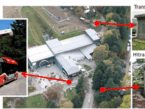
Demonstration on how to prolong the lifespan of rolling stock – Renewal of a tram door system in Szeged
Szeged Transport Company (SZKT) is a key local public transport operator specializing in electric transport (tramway and trolleybus) in the city of Szeged, Hungary. SZKT operates 44 trams, 60 trolleybuses, and 10 diesel buses (the latter for replacement service) as well as infrastructure comprising 36 km of tram tracks, 37… 
Conversion of Diesel Buses into Trolleybuses
Gdynia, Poland, has a long-standing tradition of operating trolleybuses as part of its sustainable urban transport network. However, in the early 2000s, a significant portion of its trolleybus fleet was high-floor and outdated, while the cost of purchasing new low-floor trolleybuses remained prohibitively high. The city sought an innovative, cost-effective,… 
Demonstration on how to prolong the lifespan of electric public transport infrastructure – Reutilizing heavily used trolleybus switches
Szeged Transport Company (SZKT) is a key local public transport operator specializing in electric transport (tramway and trolleybus) in the city of Szeged, Hungary. SZKT operates 44 trams, 60 trolleybuses, and 10 diesel buses (the latter for replacement service) as well as infrastructure comprising 36 km of tram tracks, 37… 
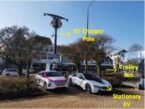
An Electric Vehicle Charger Directly Connected to the Trolleygrid
Public transport infrastructure have the potential to cater to far more loads than only their own vehicles. One example of this is the feeding of electric vehicle chargers (EV chargers). Coupling EV chargers to the existing transport grid reduces the need for a separate infrastructure, which translates to lower costs… 
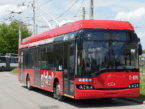
Arnhem Extends its Trolleygrid to Intercity Transport by Trolley2.0 Buses
Trolleybus line 352 is an express In Motion Charged (IMC) trolleybus service that runs between the Dutch cities of Arnhem and Wageningen. Arnhem has introduced the new IMC t-buses that can use the existing trolleygrid catenary to charge the t-bus batteries. This means that these state-of-the-art vehicles can be disconnected… 
Dutch Trams running on solar power transported directly to the overhead lines
Strukton created a unique connection between the eco solar park ‘t Oor in The Hague (NL) and the power grid of regional operator HTM. This allows tram lines 3 and 4 to run on solar power. There are 4,700 solar panels installed, producing over 1.4 Gigawatt hours per year for… 
Study on Shared PV System Between Residential and Traction Grids
Previous works in the literature have proven that, at best, bout 40% of the energy generated by a solar PV system is used by the traction grid it is connected to. This is because of the severe generation and load mismatch caused by the transport timetables which mean that there… 
The role of sensors and predictive maintenance for digital optimization and improving the efficiency of public transport in Bergamo
The role of sensors and predictive maintenance for digital optimization and improving the efficiency of public transport in Bergamo  Public transport systems are vital for urban mobility, but their efficiency and sustainability require constant improvement. In densely populated urban centers like Bergamo in the alpine Lombardy region of northern Italy,… 
Description Amsterdam’s GVB Charging Buses from the Metro Third Rail
GVB, the public transport operator of Dutch capital of Amsterdam, has completed a study and moved into a piloting phase of a new charging infrastructure for its electric buses. The pilot refers to the four bus lines which serve the northern area of Amsterdam, Amsterdam Noord. GVB’s plans for installing… 
A simple method for sizing and estimating the performance of PV systems in trolleybus grids
Solar PV systems have recently become the option for the sustainable supply of urban electric transport networks such as trams and trolleybus grids. However, no consensus exists yet on the placement or size of PV systems at the traction substations, and no method is available for easy estimation of the… 
  • 1
  • 2